
Home › Roof Hail Repair
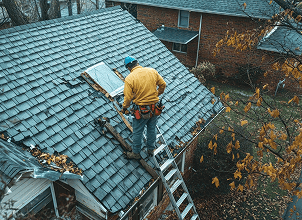
Texas leads the country in hail damage claims. The Houston metro alone gets hit by severe hailstorms multiple times per year, and a single storm can knock the protective granule coating off thousands of shingles across an entire neighborhood in under ten minutes. The problem is that most of the damage isn’t visible from the ground. By the time you notice a leak on your ceiling, the roof has been quietly deteriorating for months.
Rebel Roofing provides hail damage roof repair and inspection services for homeowners and commercial property owners across Houston, The Woodlands, Pearland, Katy, and throughout Texas and Mississippi. We find the damage, document it properly, and fix it right.
A hailstone doesn’t need to be large to do real damage. Even one-inch hail hitting at 40 to 50 mph is enough to crack shingles, dent metal flashing, and knock granules loose across the entire roof surface. And granule loss is where the long-term damage starts.
Granules are what protect the asphalt layer underneath from UV degradation. Once they’re gone, the mat dries out, becomes brittle, and starts cracking. A roof that looked fine after a storm can develop widespread cracking within 12 to 18 months. By the time water gets through, the damage has moved from a repair to a full replacement, and the insurance window may have closed.
On asphalt shingles, hail impact leaves circular bruises or cracks and strips granules from the surface. The damage is often visible in raking light but invisible from the ground at a normal viewing angle. On metal roofing, hail leaves visible dents that don’t affect waterproofing immediately but can damage protective coatings and accelerate rust over time. On gutters, downspouts, and metal flashing, hail impact is usually the clearest visible sign that the roof took a hit, even when shingle damage is subtle.

Every hail damage assessment starts with a complete roof inspection, not just a visual scan from the driveway. We physically walk the roof and check every surface systematically.
We look for circular impact marks and bruising on shingles, granule loss patterns consistent with hail impact rather than normal aging, cracked or split shingles at impact points, damage to ridge cap shingles which take hits from multiple directions, dented or displaced flashing around chimneys and vents, and gutter and downspout damage that confirms hail size and intensity.
We photograph everything. Our documentation is organized the way insurance adjusters need to see it: by location on the roof, with clear images of each damage type, and a written assessment of the repair or replacement scope. If your insurer sends their own adjuster, you’ll have a thorough independent record to compare against.
We physically walk the entire roof and document every impact point, area of granule loss, cracked shingle, and damaged flashing. You get a clear written assessment of what was found, where, and what it means for the structural integrity of your roof. No guesswork, no upselling damage that isn’t there.
We photograph every damaged area and organize the documentation the way insurance adjusters need to see it: by roof section, with damage type identified and storm date confirmed. If your carrier sends their own adjuster, you have a thorough independent record. We can walk you through the claims process and answer questions about what your policy is likely to cover.
Once the scope is agreed, we get to work. Partial repairs are typically completed in a single day. Full replacements take two to three days depending on roof size. We use materials rated for the Texas and Mississippi climate and match existing shingles or roofing profiles where repair work meets undamaged sections.
Before we leave, we walk the entire repaired area to confirm every shingle is seated correctly, every flashing point is sealed, and every penetration is watertight. You receive warranty documentation on the spot. The yard gets a magnet pass for nails and all debris is hauled away.
Most Texas homeowners insurance policies cover sudden hail damage. What they don’t cover is damage that wasn’t reported promptly, or deterioration that developed because an initial claim wasn’t filed. Most policies have a one-year window from the date of the storm to file a claim, and some carriers have tightened that to six months.
If your area took a hail hit recently, the time to act is now, not when the leak shows up.
Rebel Roofing documents hail damage in the format insurers require. We identify the storm date, confirm the damage is consistent with hail impact rather than wear and tear, photograph every affected area, and provide a written scope of repair or replacement. We’ve worked with homeowners through the full claims process across Houston, Pearland, Sugar Land, Katy, and throughout the Texas market.

The most reliable way is a professional inspection by someone who physically walks the roof. From the ground, you may notice dents on gutters or downspouts, which is often the clearest visible sign of a significant hail event. On the roof itself, look for circular impact marks or bruising on shingles, dark spots where granules have been knocked loose, and cracked or split shingles. Many homeowners don’t see any obvious signs until they get on the roof, which is why we recommend an inspection after any storm that affected your area.
Most Texas homeowners insurance policies cover sudden hail damage. Coverage details depend on your specific policy, your deductible, and when the damage occurred relative to when you file the claim. Texas policies typically have a one-year window to file after a storm, and some carriers have moved to six months. Getting an inspection and starting the documentation process promptly protects your ability to make a successful claim.
Most Texas homeowners insurance policies require claims to be filed within one year of the damage event. Some carriers have reduced this to six months. The clock starts on the date of the storm, not the date you discover the damage. If your area was hit by a significant hailstorm, scheduling an inspection quickly is the safest move regardless of whether damage is immediately visible.
Getting an inspection does not affect your insurance rates. Filing a claim may affect your rates depending on your carrier and claims history, but that’s a separate decision you make after you have the full damage assessment in hand. We give you the documentation and the repair scope, and you decide whether to proceed with a claim. There’s no obligation either way.
Cost depends on the extent of the damage, the roofing material, and the size of the affected area. A partial repair covering a section of damaged shingles can run a few hundred to a few thousand dollars. A full roof replacement after widespread hail damage is a larger investment that is frequently covered fully or partially by homeowners insurance. The only accurate number comes from a free inspection and written estimate for your specific roof.
Yes. Hail damage on metal roofing typically involves denting of panels and damage to protective coatings rather than structural failure. In most cases, affected panels can be replaced or treated to prevent rust progression at the impact sites. We inspect metal roofs after hail events and assess whether panel replacement, coating repair, or full section replacement is the right approach.